

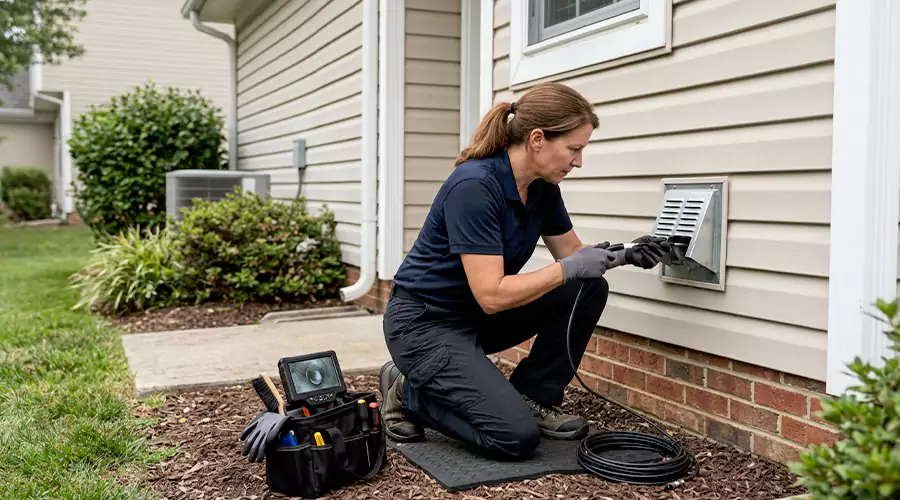
To clean a dryer vent from outside, turn off the dryer, locate the exterior exhaust hood, remove accessible lint and debris, and use a suitable dryer vent brush or vacuum attachment to clean the reachable duct passage. After cleaning, restore the vent hood and check that its damper opens freely. Long, concealed, or roof-terminated ducts may require professional cleaning from both ends.
Dryer vents carry hot, moisture-laden air and small lint particles from the appliance to the outdoors. Although the removable lint filter collects much of the material, some debris can accumulate within the exhaust duct and exterior termination. Over time, deposits can reduce airflow and increase drying times. A blocked exterior hood can make the problem worse by preventing humid air from leaving normally. Cleaning the outside dryer vent is useful maintenance, but it should be approached carefully. Removing lint from the visible outlet does not automatically mean the entire duct has been cleaned.
Can You Clean a Dryer Vent From Outside?
Yes. Many dryer vent systems can be accessed through their exterior termination, especially when the outlet is located on a ground-level wall. The home depot and lowe's both describe procedures for removing accessible lint through the outside opening using suitable brushes and vacuum equipment. However, some exterior hoods have removable covers, while others contain fixed or integrated components. Their removal procedures differ. Do not force open a sealed assembly or damage the exterior flashing. If the outlet is on a roof or an upper-story wall, professional service is usually the safer approach.
What Tools Do You Need?
The tools depend on the vent length, its accessibility, and the type of exterior hood.
| Tool or Material | Purpose |
|---|---|
| Dryer vent cleaning brush | Loosens lint inside the duct |
| Flexible extension rods | Reaches farther into suitable ducts |
| Shop vacuum with suitable attachment | Collects loosened lint |
| Screwdriver | Removes covers designed for service |
| Flashlight | Helps inspect the opening |
| Protective gloves | Protects from sharp metal edges |
| Dust mask and eye protection | Reduces exposure during cleaning |
| Soft cloth | Cleans the exterior hood |
| Approved replacement fasteners | Restores serviceable covers |
| Suitable metal transition clamps | Secures applicable appliance connections |
Choose a brush that matches the nominal duct diameter. Avoid oversized tools that could damage the duct or become stuck.
How to Clean a Dryer Vent From Outside Step by Step?
These steps apply to an accessible conventional dryer exhaust outlet. Follow the dryer and vent manufacturer's instructions. If the route is unfamiliar, damaged, or difficult to reach, use a qualified dryer vent cleaning service.
Step 1. Turn Off the Dryer
Stop the appliance and allow it to cool. Disconnect an electric dryer from power if the work involves removing or handling connected duct sections. For gas dryers, avoid moving or disconnecting gas components unless qualified to do so. Do not clean the exhaust passage while the dryer is operating.
Step 2. Locate the Exterior Exhaust Hood
Find the outlet where the dryer exhaust leaves the building. It may be positioned on a side wall, basement wall, or another approved exterior location. Confirm that you have identified the dryer outlet rather than a bathroom fan, kitchen exhaust, or HVAC vent.
Step 3. Inspect the Exterior Opening
Look for visible lint, stuck dampers, damaged louvers, and nesting materials. A dryer exhaust hood should allow air to leave freely. The 2024 International Residential Code prohibits screens at dryer exhaust terminations because they can trap lint. Photograph any obvious damage before disassembly if you need to discuss repairs with a contractor.
Step 4. Remove Accessible Debris
Carefully remove loose lint from around the exterior opening. Use gloved hands or a suitable vacuum attachment without pushing debris deeper into the duct. Avoid inserting sharp metal tools that might damage the hood or duct. If a bird or animal is present, do not reach into the opening. Arrange appropriate wildlife removal and vent inspection.
Step 5. Open the Serviceable Hood
If the vent hood is designed for cover removal, follow its manufacturer's procedure. Some products have removable louvers or a service panel. Others should remain attached to the wall because removal could disturb weatherproofing. Do not pry apart a fixed assembly simply to gain access.
Step 6. Vacuum the Accessible Duct
Place a suitable vacuum attachment into the opening and collect reachable lint. A shop vacuum may help remove deposits near the outlet. Work gently around the inner duct wall and avoid damaging joints. Lowe's recommends using a dryer vent brush for material farther inside the passage.
Step 7. Insert the Dryer Vent Cleaning Brush
Feed an appropriately sized brush into the duct. Move it carefully to loosen lint and withdraw it periodically to remove collected material. Use compatible extension rods only when the product is intended for the duct configuration. Do not force the brush past an obstruction. If the brush stops abruptly, investigate rather than applying excessive pressure. A disconnected fitting or sharp elbow may prevent safe passage.
Step 8. Remove Loosened Lint
Vacuum the loosened debris from the accessible opening. Repeat the process until the reachable duct section is clear of substantial deposits. Cleaning tools should not be left inside the exhaust passage. Confirm that all brush attachments and extension rods have been recovered.
Step 9. Inspect the Exterior Damper
Check that the vent flap or louvers move freely. A broken or stuck damper can restrict airflow even after the duct has been cleaned. Replace damaged exterior components using suitable dryer exhaust products. Do not add a mesh screen to keep pests out.
Step 10. Restore the Vent Hood
Reinstall serviceable covers and fasteners according to the manufacturer's instructions. Inspect any seals or flashing that were disturbed during the work. The exterior assembly should remain secure and weather-resistant, with an unobstructed exhaust passage.
Step 11. Inspect the Indoor Connection
If safely accessible, check the metal transition behind the dryer for crushing, tears, or loose clamps. Cleaning from outside may not remove lint accumulated near the appliance outlet. Where additional interior cleaning is required, follow the manufacturer's shutdown and disconnection procedures. Use professional assistance when handling gas dryer connections or difficult equipment access.
Step 12. Restore Operation and Check Airflow
After all duct connections and covers have been restored, operate the dryer according to its instructions. Check whether the outside damper opens and exhaust air flows normally. Whirlpool recommends observing airflow at the exterior hood when investigating vent restrictions. Stop using the dryer if it overheats, produces a burning smell, or continues displaying restricted-airflow warnings.
Can You Clean the Entire Dryer Vent From Outside?
Sometimes, particularly when the route is short and relatively straight. However, the cleaning brush may not reach every section of a long system. Sharp elbows and concealed joints can prevent complete cleaning from one end. A professional may need to access both the dryer connection and exterior termination. Specialized cleaning or inspection equipment can help determine whether deposits remain. Do not assume that removing one handful of lint means the full duct has been cleared.
Can You Use a Leaf Blower to Clean a Dryer Vent?
Some homeowners use leaf blowers to move lint through dryer exhaust passages, but this is not the preferred method for many systems. The home depot notes that blowing debris through a vent can be less effective than vacuuming and brushing. Air pressure may move loose lint without removing deposits attached to the duct wall. Improper methods can also push material into obstructions or place strain on existing joints. A suitable dryer vent brush and vacuum are generally more controllable for accessible cleaning.
Can You Clean a Dryer Vent on the Roof?
A roof termination can require special equipment and fall protection. Roof caps may contain dampers or components that are damaged by aggressive brushing. Removing the cap incorrectly can also compromise roof flashing. For these reasons, professional cleaning is generally recommended for roof-terminated dryer exhaust systems. Never climb onto an unsafe roof solely to perform routine dryer vent maintenance.
How Often Should You Clean an Outside Dryer Vent?
Inspect the exterior outlet periodically for lint and obstructions. The U.S. Fire Administration recommends cleaning dryer exhaust ductwork annually. Whirlpool advises additional cleaning when drying times increase or airflow becomes restricted. The lint filter should also be cleaned after every load. Heavy laundry use, pet hair, and complicated vent routes may justify closer inspection.
What Mistakes Should You Avoid?
Common cleaning mistakes include:
- Cleaning while the dryer operates.
- Working on an unsafe ladder or roof.
- Damaging the exterior hood while removing it.
- Pushing lint deeper into the duct.
- Forcing a brush through a sharp obstruction.
- Using tools that can separate metal duct joints.
- Leaving cleaning attachments inside the passage.
- Ignoring a crushed indoor transition duct.
- Installing a lint-trapping screen.
- Failing to check airflow afterward.
A safe cleaning process should leave the entire exhaust system properly connected and unobstructed.
Conclusion
Cleaning a dryer vent from outside can remove lint and debris from accessible exhaust passages. The process involves safely shutting down the appliance, inspecting the exterior hood, using suitable cleaning tools, and verifying normal airflow afterward. However, outside-only cleaning may not reach every section of a long or complicated vent system. Annual maintenance and professional cleaning when needed help prevent restrictions and support safer dryer operation.